- The sawdust newsletter
- Posts
- Issue #17
Issue #17
In today’s issue we’ll be looking at which saw is the best, why doors are made the way they are, looking at an old school french joiner, and a beautiful table.

David Walton
December 24, 2025
From The Bench
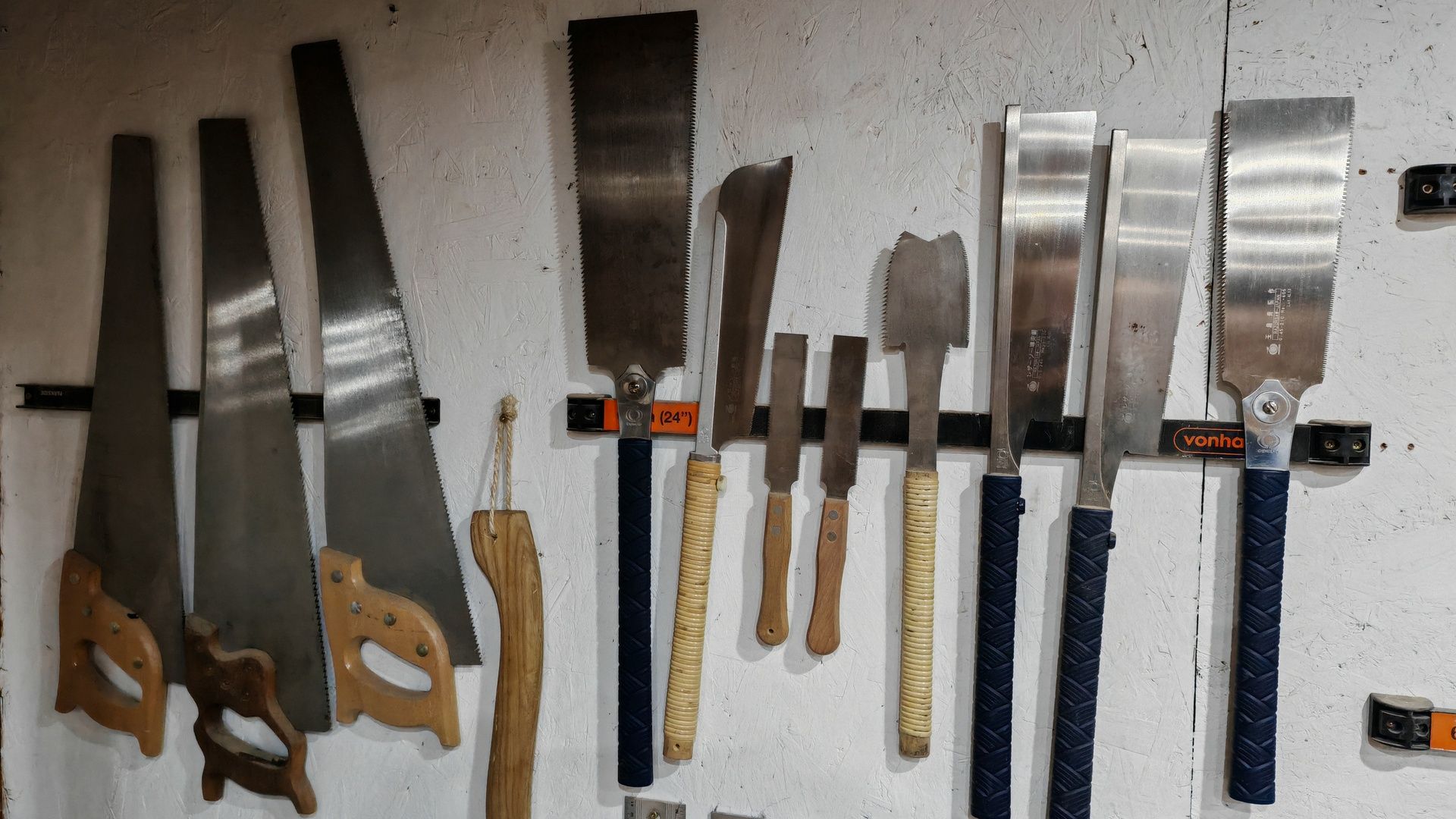
I own one or two handsaws and I have to say, they're one of my favourite tools in the shop. In recent years I have moved pretty much exclusively to Japanese saws when using hand tools, with the very odd occasion when I'll use a frame saw, but usually I can be seen with a Ryoba saw in my hand. I do still own traditional style Western saw's, and while I have nothing against them per-se, it does raise a few questions!
An age old debate which can, and has gotten heated at time's is.......... Which is the best saw? Japanese or Western saw's?
For me it's Japanese saws hand's down, and again I have nothing against Western saw's. I just think Japanese saw's, specifically the Ryoba saw, is a hard one to beat. The saw is just so versatile, and you can do just about anything with it, from cutting dovetails, to cutting out circle's.

There tends to be more teeth on the Japanese saw's, the set is typically more fine, the teeth on a crosscut edge are closer together, sharpened differently, and usually give a fine cut with minimal splintering, even without a knife wall to sever the fibre's before cutting. This can't be said about a Western panel saw etc. which will leave splintering of the fibre's.
The nature of use (pulling) with Japanese saw's, means a thin blade can be used (0.5mm and smaller). This can be advantageous in some applications, and it does allow me to manipulate the blade (without damage) so I'm able to cut curves and circles with a Ryoba saw. I do have a number of Japanese saw's for different tasks, like dovetailing etc. which I do use, with some comparable results from Western like saw, but for me I think the Japanese saw's are better.

Ironically, my frame saw which I use from time to time, has a Japanese blade, and cuts very fast because of this. I think a frame saw with a Japanese blade has so much potential, but admittedly I do need more time with the frame saw, to utilise the potential.
If you are a beginner, or just moving more towards hand tools, I'd strongly advise you to try, and learn both Western, and Japanese saw's. I do believe both have merit, even though it sounds like I'm putting the Western saw's down which I'm not, and there is some beautifully crafted and capable saw's, but for me, in my experience, I believe Japanese saw's are better. I personally find them sharper, and more versatile.
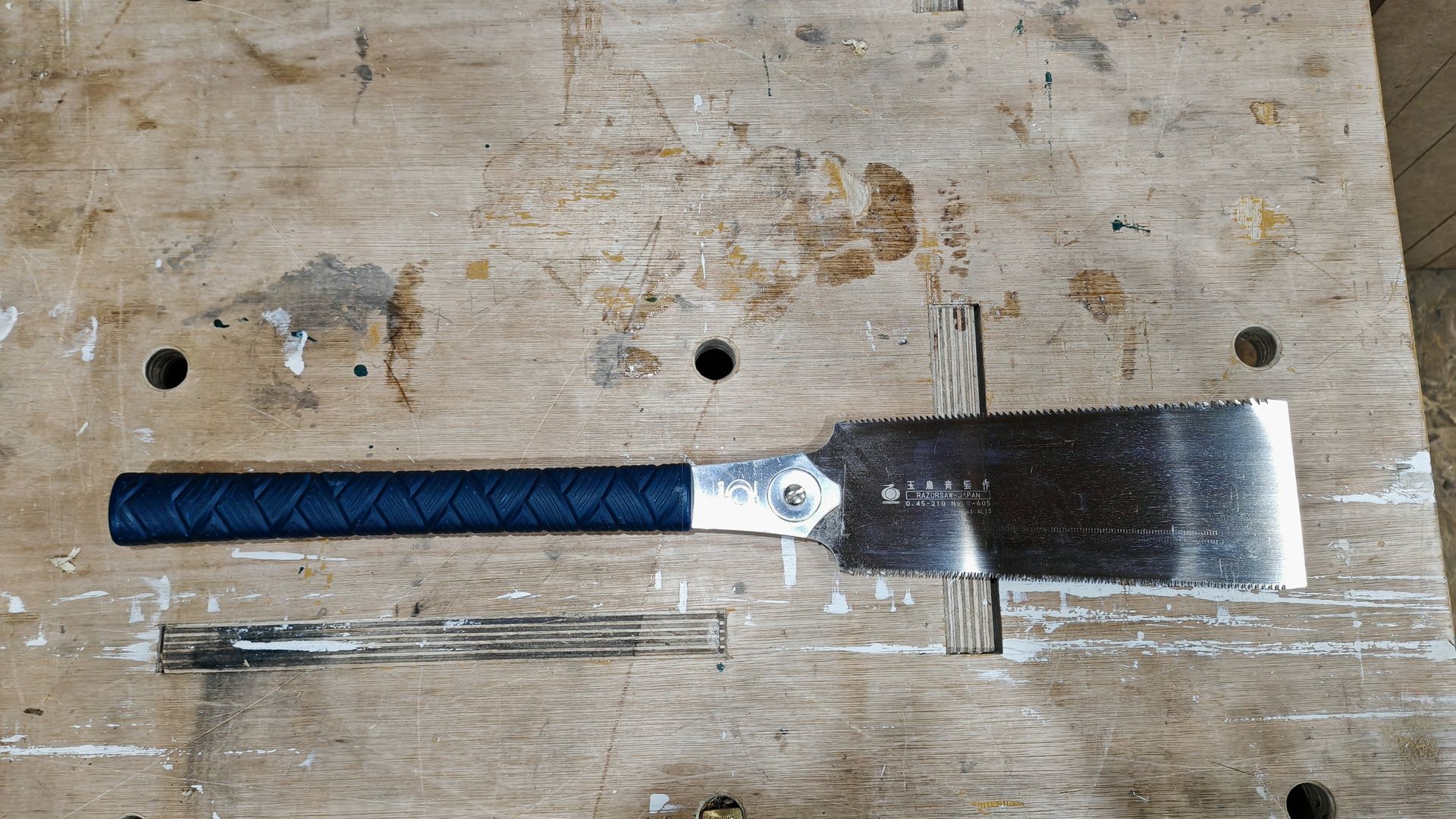
Out of all the saw's I own, even including my festool track saw, if I could only pick one for the rest of my days, I would pick a good Ryoba saw, hands down. It can literally cut circles, cut dovetail joints, as well as rip and crosscut. As with most tools you should seek a reputable name/saw. I've tried several, and haven't been impressed at all, with teeth breaking etc.
If you're interested in purchasing a good Ryoba saw, I can recommend the Gyokucho Ryoba saw's, which you can get HERE (affiliate link) in my amazon store front, which will help the newsletter at NO cost to you. I'm not associated with Gyokucho, I just think they're a good quality saw, which will last a very long time before needing to replace the blade, even with heavy use.
What's your preference? Do you think I'm wrong, or do you agree with me? Leave your comments below.
Maker Spotlight

The above is a beautiful mid century style drop-leaf table, made by b.a furniture operating out of Sydney Australia. I love the form, and proportions of this table, so much so I’m going to make a similar table sometime in the future. Very beautiful indeed! Click the image to see the reel of the table.
Question Of The Week
Q. Why are doors constructed the way they are?
-John, London, UK.
A. This is a good question, and the average person is oblivious to the answer. If we put the joinery to one side, early doors were built with vertical boards and battens nailed in place, and some doors are still made like this today. The problem with this type of construction is wood movement, so because every board was horizontal, and usually wide, the size of the door could change drastically, depending on the location, and the season. This created problems as you can imagine with the boards swelling , which required the width to be trimmed, thus leaving a large gap allowing draft and cold into the dwelling.
More modern doors evolved to be constructed of rails and Stiles, which minimises the overall distance the door will expand/contract. This is because the rails take up most of the width distance, and end grain to end grain (the rails) will only move very minimally (barely noticeable). The styles (same orientation as the boards), are only a portion size of the boards making older style doors, limiting the overall expansion/contraction even more.
This doesn't completely solve the problem, but doors are a lot more stable with this type of construction, and once they settle, fewer problems are seen.
Do you have a woodworking related question? Reply to this email, or login and leave your question below. I read them all and will feature one in the next issue.
What Caught My Eye
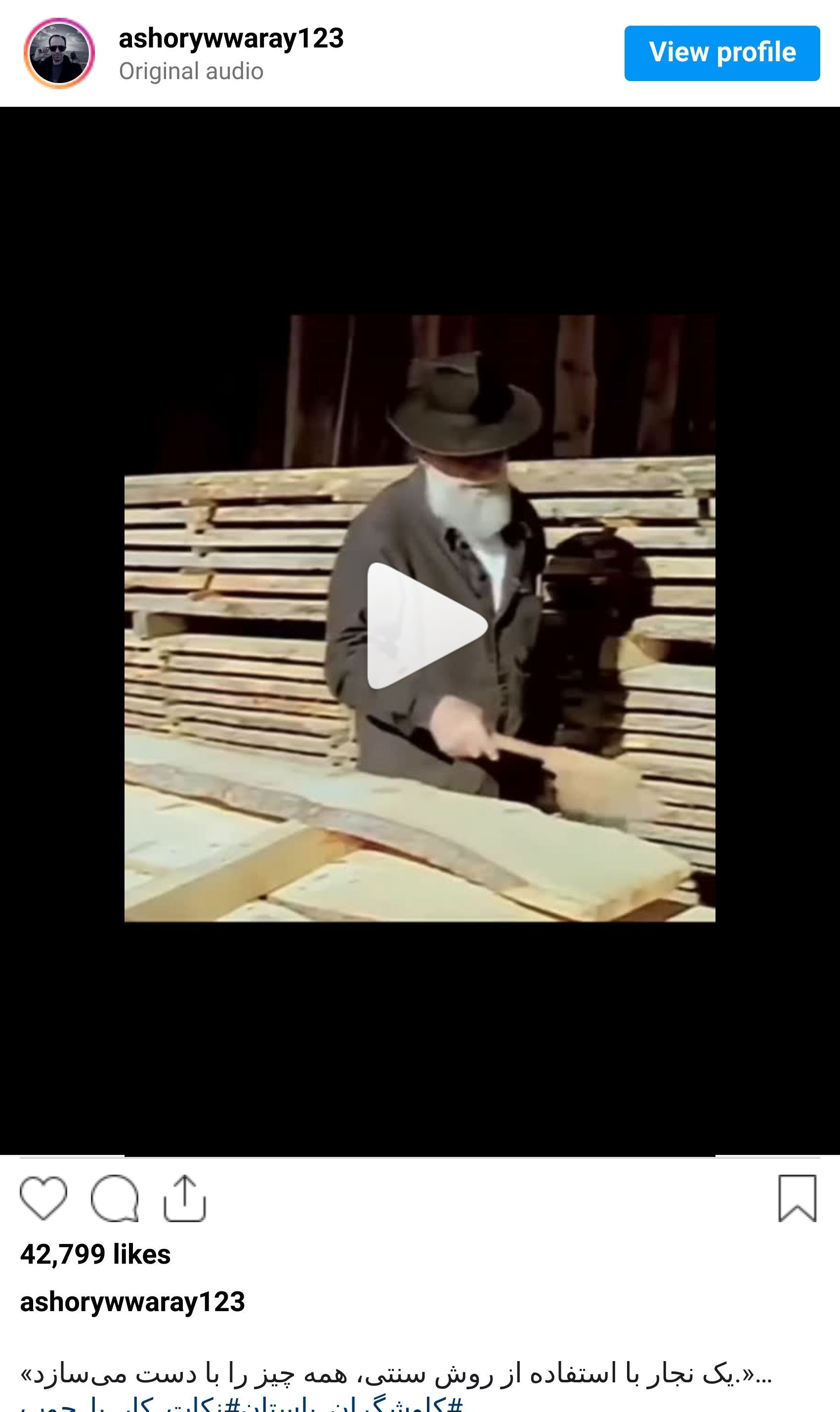
This is a French craftsman, I’m unaware who he is, or when this video was shot, it’s about 3 minutes long, and well worth a watch (click the image). The thing that caught my eye was the way he uses the frame saw. While ripping a section of board, the saw is used 90 degrees with the floor. While I’ve tried this technique before (not very well may I add), I’ve only ever seen one other video showing this, and I have looked extensively in the past, and would like to learn more. Does anyone have any links they can post?
Final Shavings
In case you missed it, my last video (building a folding workbench) can be watched here, and a podcast is available to those who are interested. You can listen on Spotify here, and Apple Podcasts here, and watch on YouTube here.
I'm currently making drawer modules, that form a workbench as part of my shed organisation. If this interests you, keep an eye on my Instagram and YouTube for posts.
If you’ve enjoyed this, feel free to share with someone who’d appreciate it. This will help to grow and support the newsletter.
Until next time
-David
DW Woodworks
Reply